Circular MIC Array
Circular microphone layout for surrounding pickup.


Sound source localization
Help service robots, guide robots and AI devices identify where a speaker is, focus on human voice and interact more naturally.
Why localization matters
In human-robot interaction, users may call a device from any angle. Sound source localization helps the robot turn, respond and maintain a more natural interaction flow.
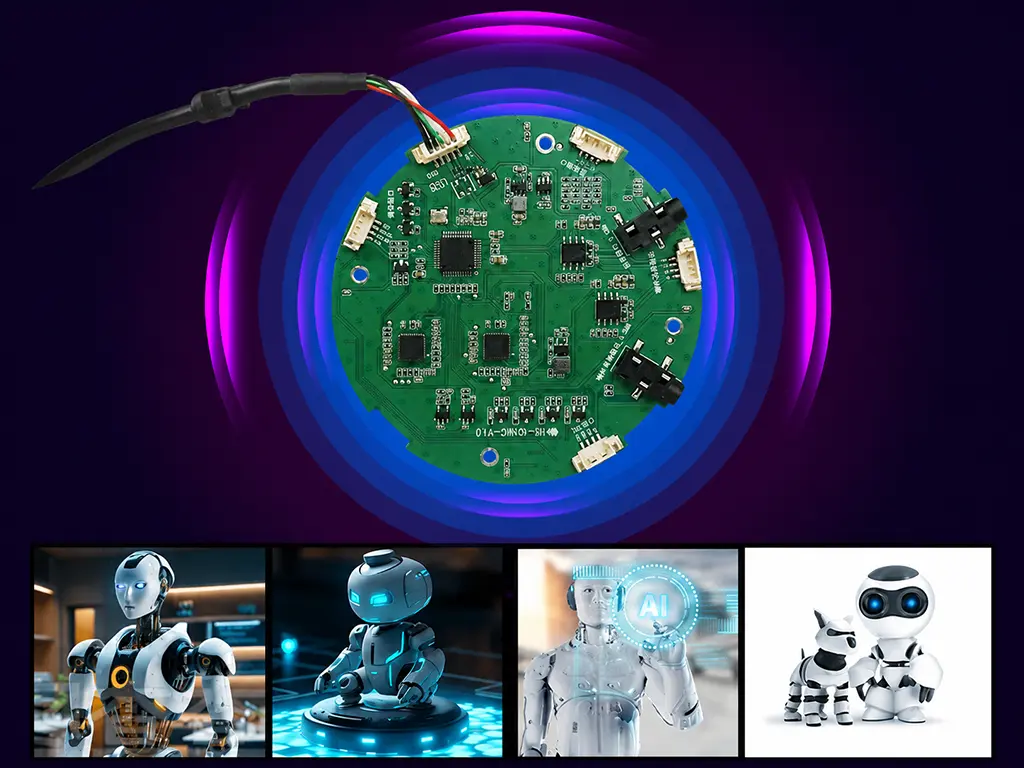
Circular array
Circular microphone array designs support omnidirectional pickup, sound source localization, noise suppression, automatic gain control and speaker output for robots.
Circular microphone layout for surrounding pickup.
Estimate speaker direction for interaction response.
Echo cancellation, noise suppression and AGC support.
Selection guidance
Sound source localization is an estimate of incoming sound direction, not a substitute for a complete positioning system. Robot body reflections, built-in speakers and operating noise should be considered during integration.
Confirm whether the robot needs direction-of-arrival feedback for turning, an LED indication or a voice-interaction trigger.
Plan array height, grille openings and clearance from motors, fans and body panels that may affect the acoustic path.
Where the robot plays audio, share the speaker location and host reference path so echo control can be evaluated.
Recommended products
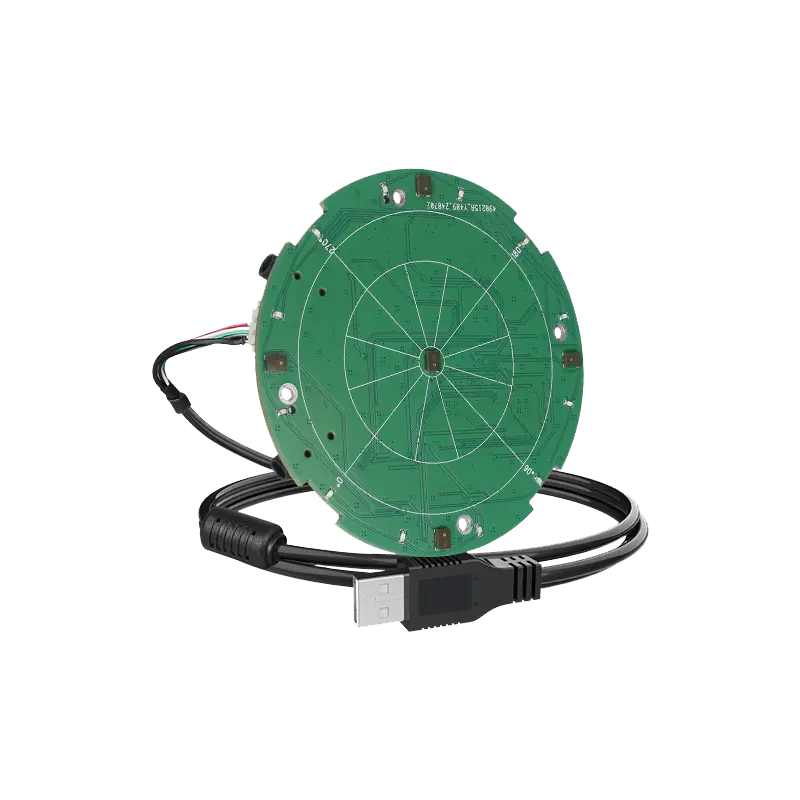
5-mic circular array module with 360-degree pickup, sound source localization and LED direction indication.
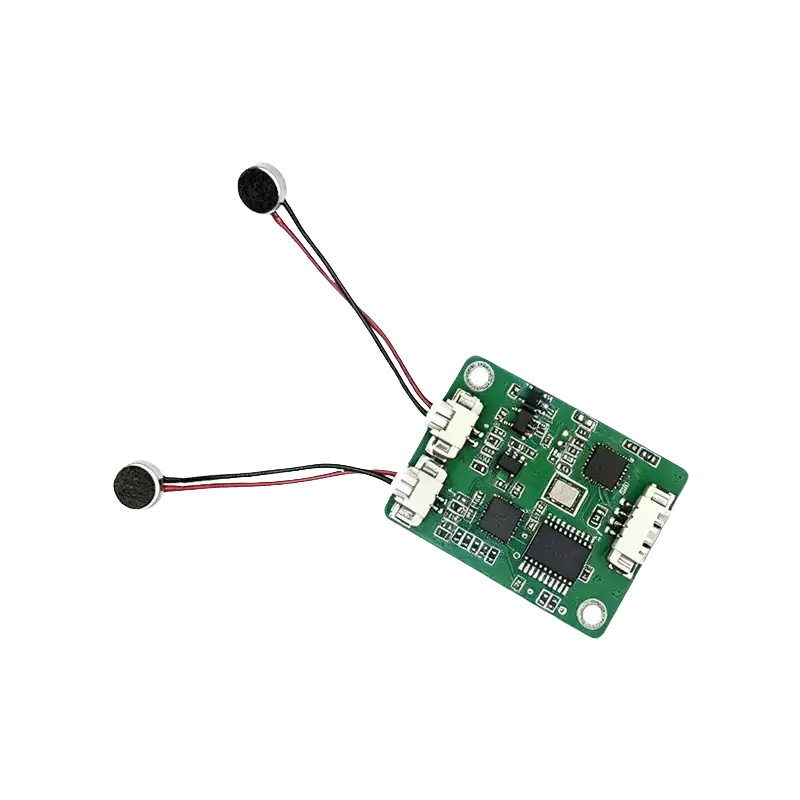
2-array 360-degree far-field pickup module with voice enhancement, noise suppression and AGC.
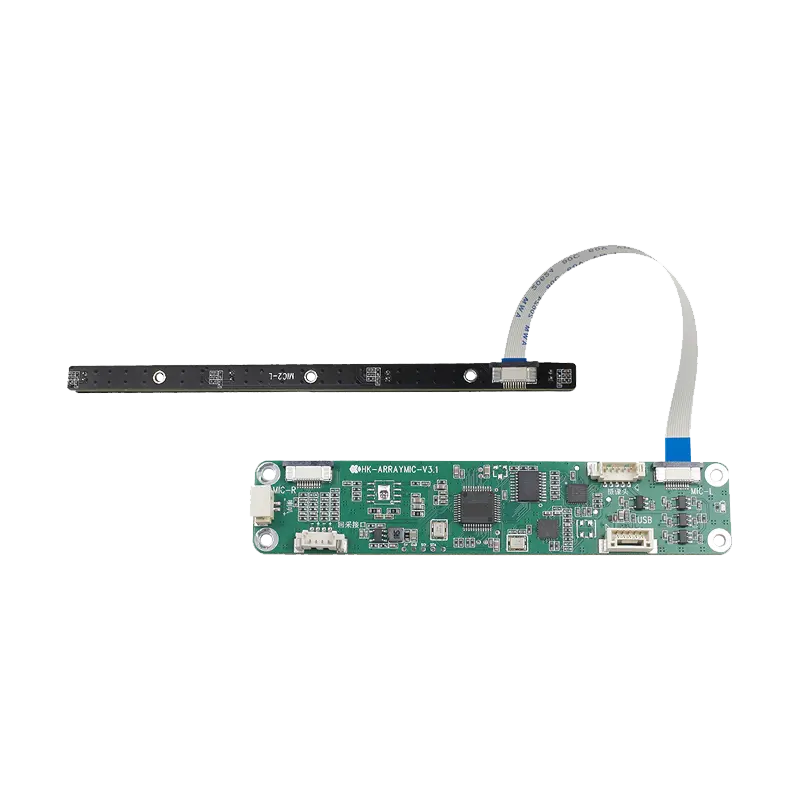
4/8 array far-field module for embedded AI voice interaction and smart device designs.
Use cases
Reception, shopping mall and hotel assistant robots.
Exhibition, hospital and public service guide robots.
Desktop or embedded AI voice interaction devices.
Classroom interaction and voice learning devices.
FAQ
It estimates the direction from which a sound arrives at the microphone array. A robot can use this direction feedback to orient an interaction or visual indicator.
The array is intended to estimate sound direction. Exact person position depends on the full sensing system, environment and application software.
A circular layout is well suited to all-around pickup and direction feedback when users may speak from different sides of the robot.
It can be evaluated with echo control and acoustic integration. Speaker position, playback level and enclosure design should be included in sample validation.
Work With HAOKAI
Share pickup distance, microphone layout, interface, structure, algorithm requirements and target production plan. HAOKAI can recommend or customize a practical audio front-end solution.