Microphone Array OEM / ODM Services

Custom Microphone Array Design Built Around Your Device

Turnkey acoustic front-end solutions from array layout and DSP algorithm tuning (AEC/NR/DOA) to custom PCB, interfaces, and mass production.

Start a Custom Project

What can be customized

Customize the acoustic front end around the real product, not a lab bench.

HAOKAI helps OEM and ODM teams connect microphone layout, audio algorithms, hardware interface and mechanical structure into one production-ready voice pickup module.

Array Layout

2/4/8-mic and circular arrays

Choose linear, circular, front-facing or role-separated microphone layouts according to device structure and pickup direction.

2 MIC 4 MIC 8 MIC Circular
Audio Processing

AEC, noise reduction and voice enhancement

Tune echo cancellation, noise suppression, AGC, beamforming and voice enhancement around the speaker position and acoustic environment.

AEC NS AGC Beamforming

Interface

USB Audio, I2S, PDM and host control

Match the host platform with UAC 1.0/2.0, I2S, PDM, SPI and I2C control, then define firmware parameters and raw or processed audio output.

UAC 2.0 I2S PDM I2C / SPI

Mechanical Fit

PCB, enclosure and structural acoustic design

Adapt PCB outline, mounting holes, acoustic sealing, vibration isolation, mesh openings, LED indicators and camera-microphone integration.

PCB Sealing Damping A/V

Platform compatibility

Integrate with the DSP, SoC and operating environment you already use.

A microphone array is part of the full audio system. We align the module, protocol and tuning path with the selected host platform rather than treating the array as a standalone accessory.

DSP and host platforms

Platform selection and tuning can be aligned with the compute, audio path and software stack already selected for the device.

XMOS Rockchip RK3588 / RK3568 Synaptics / Conexant Alango Raspberry Pi

Operating environments

Define driver, firmware and application integration around the target operating environment before prototype release.

Android Linux Windows RTOS Embedded SDK

Audio and control interfaces

Choose the transport and control path that fits the product architecture, certification target and production test process.

USB Audio Class 1.0 / 2.0 I2S PDM SPI I2C control

Base platforms

Start from proven modules, then adapt what your product needs.

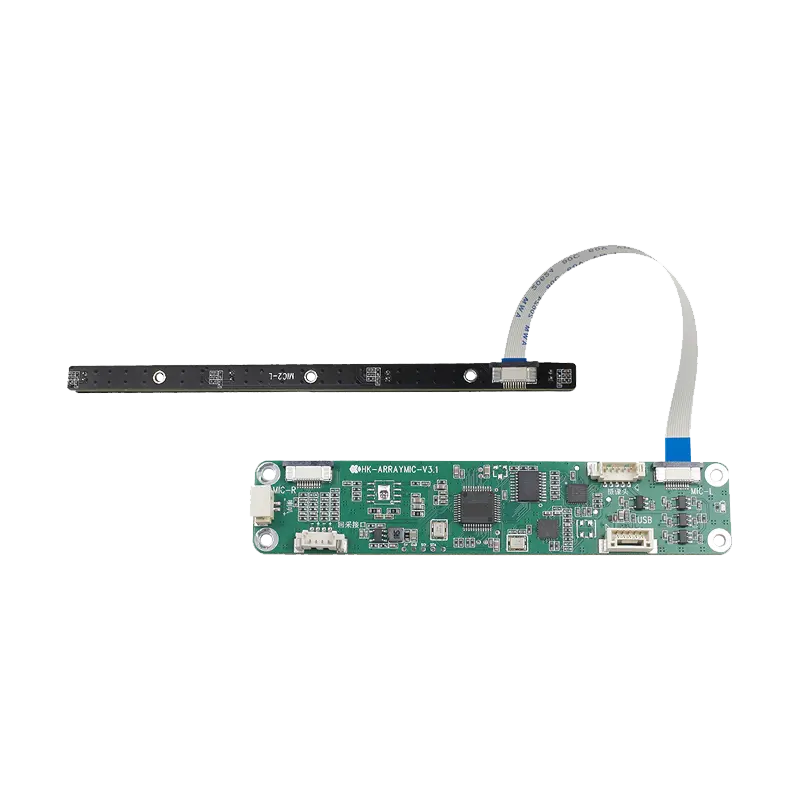
HK-ARRAYMIC-V3.2

HK-ARRAYMIC-V3.2

4/8-mic far-field module for conferencing terminals, smart displays and embedded AI voice devices.

4/8 MIC Far-field pickup AEC / NS / AGC
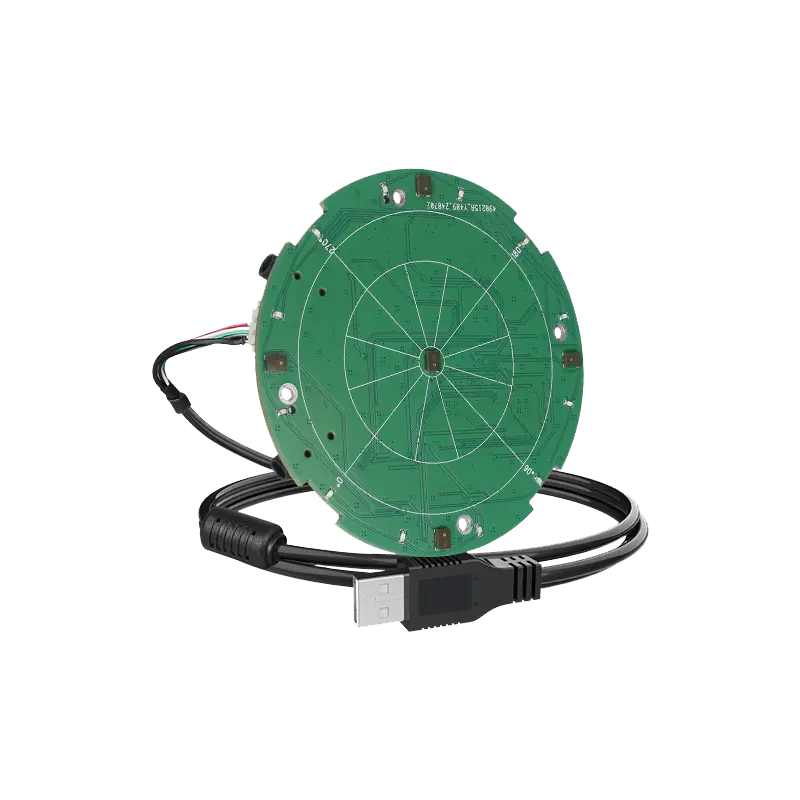
HK-QXMIC-V3.0

HK-QXMIC-V3.0

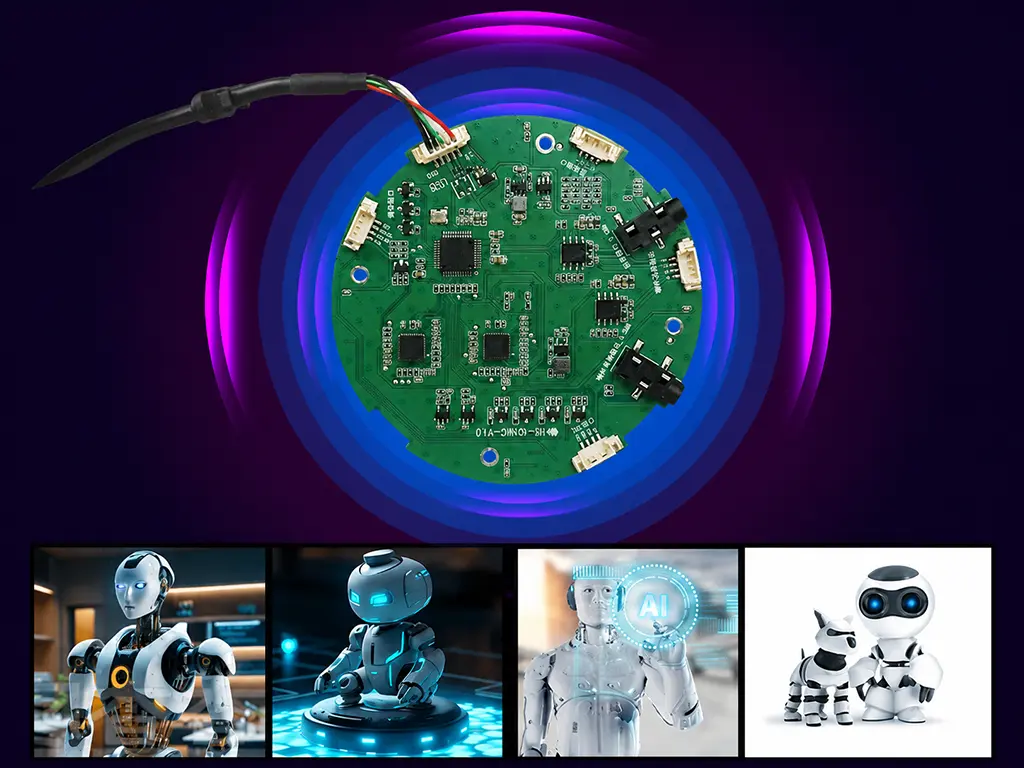
Circular microphone array for robots and voice-interactive devices that need 360-degree pickup and direction feedback.

Circular array DOA LED direction
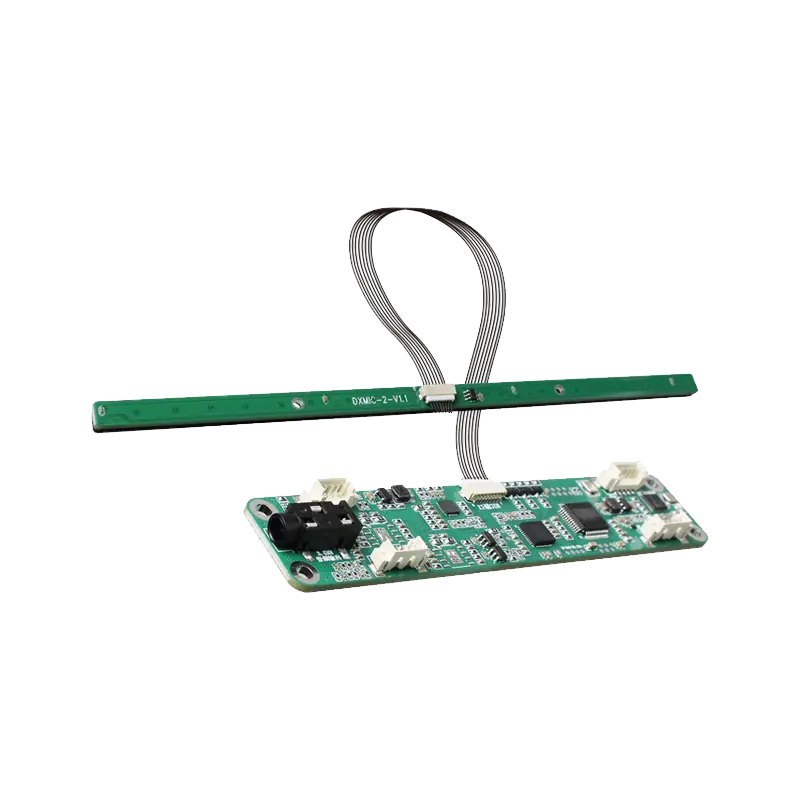
HK-DXMIC-V1.1

HK-DXMIC-V1.1

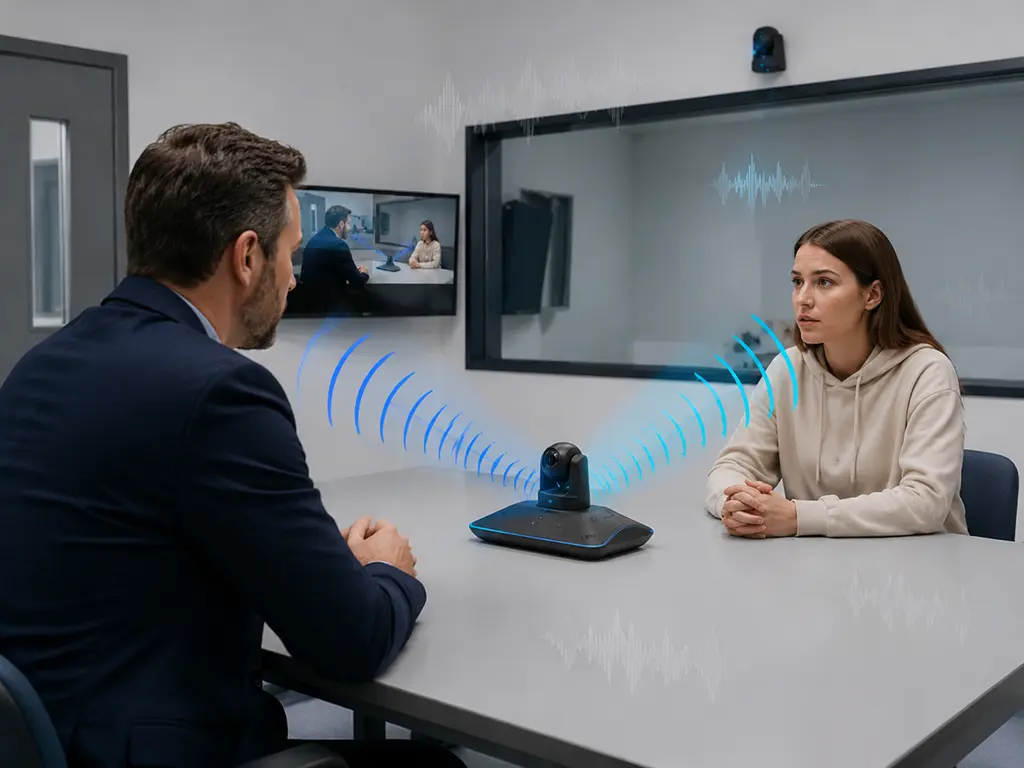
Directional array module for focused voice capture in judicial recording, service terminals and controlled conversation equipment.

60-degree pickup 4/8 MIC Focused voice
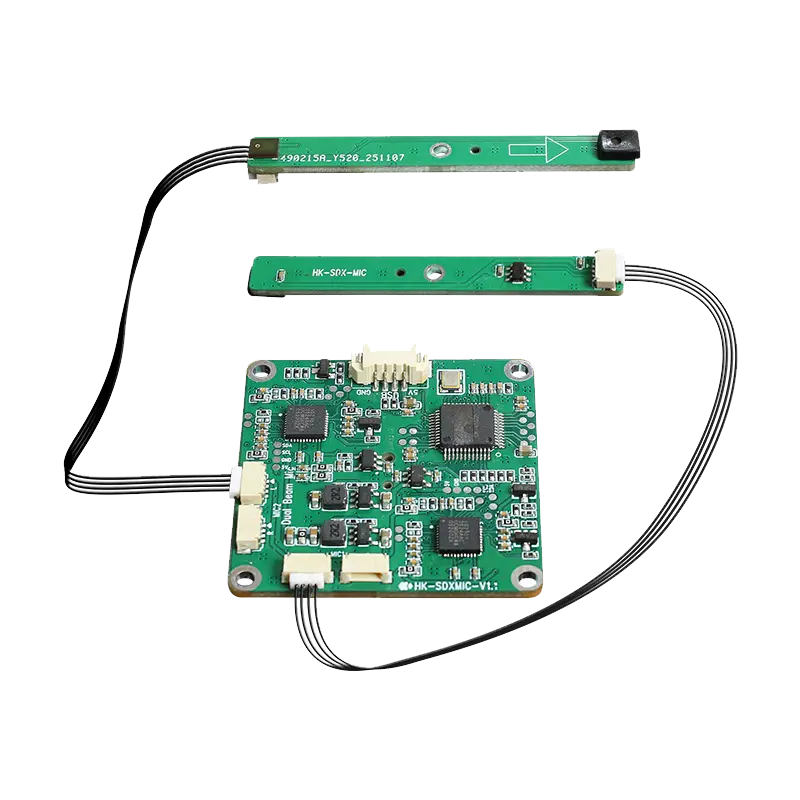
HK-SDXMIC-V1.1

HK-SDXMIC-V1.1

Role-separated microphone module for counter service, two-party recording, interview desks and translation terminals.

A/B channels L/R separation Type-C option

Acoustic performance targets

Define measurable audio outcomes before you lock the hardware.

The values below are practical design targets. Final performance is confirmed for the selected DSP platform, microphone configuration, enclosure and test environment.

Beamforming directivity is tuned against the device orientation, pickup zone and installed speaker position.

Far-field pickup

3 m, 5 m, up to 10 m

Target capture distance is defined against room noise, talker level and device placement.

Noise suppression

Up to 30 dB+

Stationary and non-stationary noise reduction is tuned to the deployment environment.

Echo cancellation

Up to 50 dB+ ERLE

AEC target depends on loudspeaker design, enclosure coupling and reference signal quality.

Sound source localization

360 degrees, within +/-5 degrees

For qualified circular arrays under the agreed test conditions.

Reverberant rooms

RT60 above 0.8 s

Dereverberation strategy and microphone placement are evaluated in the target room profile.

Mechanical and structural acoustics

Good algorithms need a controlled acoustic path.

The most expensive problems usually appear after the enclosure is frozen. We review the microphone-to-enclosure path, built-in speaker coupling and manufacturing constraints early in the design cycle.

Acoustic sealing boots

Plan silicone boots and controlled acoustic ports to reduce leakage paths between the microphone, enclosure and speaker cavity.

Vibration isolation and damping

Separate microphones from built-in speaker vibration and structure-borne noise with practical mounting and damping guidance.

Cavity and mesh optimization

Review cavity volume, port direction, dust mesh and water-resistance tradeoffs before tooling locks the acoustic path.

Application fit

Different devices need different acoustic decisions.

Scenario Voice pickup need Recommended customization direction
Video Conferencing Room voice pickup with speaker echo control 4/8-mic far-field array with AEC and AGC tuning
Smart Terminal Front-facing user voice in public service spaces Directional pickup module with noise suppression
Robotics All-around wakeup and speaker direction detection Circular array with DOA and LED indication
Judicial Recording Clear records with speaker or role separation Directional array or A/B channel-separated module
Education Teacher and student pickup for lecture capture 360-degree room pickup with camera matching
Digital Human Kiosk Noise-resistant interaction while device audio plays Directional array plus AEC and camera integration

Customization showcase

Examples of acoustic decisions shaped by the device.

Circular microphone array solution for robot sound source localization

Robot interaction array

A circular array architecture can combine 360-degree pickup, sound source localization and LED direction feedback while tuning around motor and fan noise.

Dual directional microphone array for separated voice recording

Two-party voice separation

Role-separated A/B channel arrays can be tailored for counter terminals, recording systems and translation devices where speaker isolation matters.

Development workflow

From acoustic requirement to production validation.

01

Requirement Review

Confirm application, pickup distance, speaker position, host interface, enclosure limits and production target.

02

Architecture Proposal

Select a base module or custom layout, then define microphone count, board outline, interface and audio processing direction.

03

Prototype and Tuning

Build samples, adjust firmware parameters, validate AEC/noise reduction and review audio performance in the target structure.

04

Validation and Production

Support pilot runs, test standards, reliability checks, certification preparation and mass-production quality control.

Before proposal

The right inputs make the customization faster.

Share the product context first. HAOKAI can then recommend a base module, estimate the required modification scope and identify acoustic risks early.

Application scenario and target device type
Pickup distance, pickup angle and expected microphone count
Speaker position and whether echo cancellation is required
Host platform, operating system and preferred interface
Mechanical size limits, mounting method and acoustic opening plan
Camera integration, LED indication or enclosure requirements
Estimated annual quantity and certification requirements

FAQ

Common questions about microphone array customization.

Can HAOKAI customize from an existing microphone array module?

Yes. Most projects begin from a proven base module, then adjust microphone layout, PCB shape, interface, firmware parameters, mechanical fit or camera matching to reduce development risk.

Do you support both directional and 360-degree pickup?

Yes. Directional pickup is suitable for kiosks, service counters and recording terminals. 360-degree pickup is better for meeting rooms, classrooms, robots and all-around voice interaction.

What audio algorithms can be supported?

Depending on the selected platform, projects can support echo cancellation, noise suppression, automatic gain control, voice enhancement, beamforming, sound source localization and related tuning.

Can the microphone array be integrated with a camera module?

Yes. HAOKAI develops camera modules and array microphone modules, so camera-microphone integration can be planned for conferencing, digital human, education and smart terminal devices.

Work with HAOKAI

Need a microphone array shaped around your product?

Tell us the target device, pickup distance, interface, enclosure and production plan. Our team will help define the practical customization path.

Talk to an Engineer